Microcredentials – future scenarios, technology and standards
The participants of the 9th Meeting of the Microcredentials Advisory Group discussed ongoing work on the National Microcredentials System at IBE PIB and its possible future scenarios in Poland.
A lively debate on microcredentials
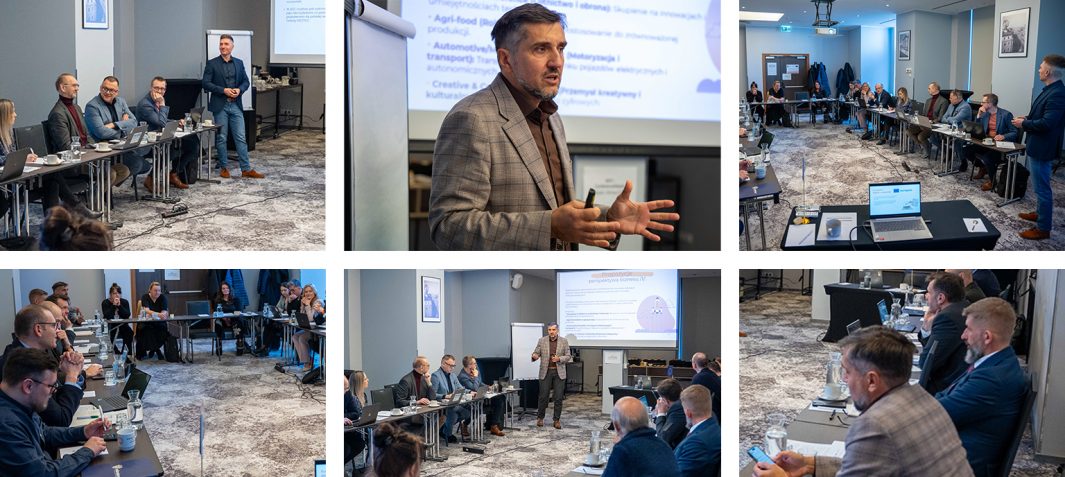
On 18 March 2026, another meeting of the Microcredentials Advisory Group took place in Warsaw. The experts discussed how to build a national system that is consistent with global technological standards. Moreover, the debate focused on possible ways to guarantee an unquestionable quality, credibility, and user attractiveness.
“It was one of the most dynamic discussions in the history of the Microcredentials Advisory Group meetings. The best ideas emerge under such circumstances,” summarised the meeting Michał Nowakowski, leader of ‘Microcredentials – A Pilot Project for Supporting Lifelong Learning’.
Microcredentials – technology and usability
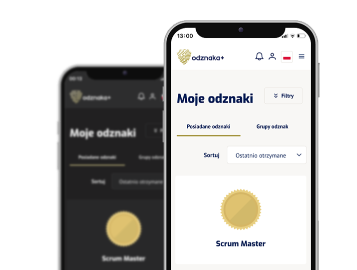
The participants of the meeting attended the presentation delivered by Grzegorz Tylek, Product Owner of the Odznaka+ app. The expert explained the importance of creating an appropriate technological environment for building a microcredentials system, so that their full potential can be realised.
“The digital nature of microcredentials presents us with many strategic challenges: the type of medium, identity verification, interoperability, compliance with existing data exchange standards, and their security. But that’s not all. Microcredentials simply need to be appealing and useful. That’s why user-centred, rather than institution-centred, design, excellent UX (User Experience), and the functionality of the Odznaka+ app are so important,” he said, and added:
“Our goal is to focus on technology and the usefulness of the Polish free platform for managing microcredentials.”
The Advisory Group participants also highlighted the importance of ensuring that the system being developed at IBE PIB aligns with European solutions.
“Microcredentials are to be described in a clear way, so they can be issued and checked on the national level, also with the use of a personal ID number (PESEL) number. The same model will be aligned with emerging European solutions from the outset, meaning no subsequent changes will be required. As a result, microcredentials will be transparent and usable not only in Poland but across the entire European system, including Europass and European Digital Credentials,” emphasised Michał Nowakowski, leader of the microcredential project at IBE PIB.
Microcredentials will change the non-formal education
Marcin Kowalski, board chairman of Human Partner, shared his insights from the implementation of microcredentials in a training company:
“The microcredential system will have a profound impact on the development of the non-formal education sector in Poland. Through concise, precise validation of skills, participants in courses, workshops, or training programmes can prove what they have learnt – without the need to complete long, costly qualifications. This strengthens the credibility of private educational providers and facilitates collaboration with employers, who gain a tool for the rapid verification of competences.”
According to Human Partner CEO, microcredentials will make the non-formal sector more competitive and innovative, ensuring that training providers’ offerings are better aligned with the needs of a fast-changing labour market.
Group members also heard a presentation from Dr Wojciech Stęchły, who outlined updates to the National Microcredential System Standards project currently being developed at IBE PIB. Participants were in full agreement that quality assurance and building trust in microcredentials remain the most critical priorities in Poland.
“What we consider crucial now is building an understanding of the importance of microcredentials not only among providers but also among recipients – both employees and employers. From an employer’s perspective, the most important aspects are quality, comparability, and trust. Microcredentials must clearly demonstrate the specific skills an employee possesses and the tasks for which they are best prepared,” commented Małgorzata Lelińska, Director of Department of EU Funds and Digital Education at the Lewiatan Confederation.
“I am certain that microcredentials are the right answer to the changing needs of the labour market, because the forms of learning they relate to allow skills to be quickly updated without lengthy and costly training processes. Businesses also expect a strong link between microcredentials and practical experience – ideally when employers are co-creators of programmes and assessment criteria. In Poland, we need a system that is not over-regulated by law, and that is useful, widely accessible, and easy to use for both companies and employees,” she added.
Microcredentials and the future scenarios
In the second part of the meeting, the participants of the Microcredentials Advisory Group took part in workshops that aimed to facilitate possible scenarios of this particular form of validating competences in Poland. Stakeholders from various backgrounds view microcredentials as a significant opportunity and a solution to the challenges ahead. This is certainly the case within the academic community.
“One of the primary challenges currently facing universities is the demographic downturn. Microcredentials can help institutions mitigate the effects of declining student numbers by enabling them to reach a broader audience. Furthermore, these short educational formats align with learners’ needs and represent a desirable alternative to traditional undergraduate and postgraduate degrees,” emphasised Marek Michajłowicz, Deputy Director of the National Information Processing Institute (OPI PIB).
As he noticed, microcredentials will become increasingly valid, especially given the forthcoming changes in European regulatory frameworks for digital credentialing.
“It is also worth noting that with the imminent implementation of the eIDAS2 Regulation, interoperability and the capacity for cross-border information exchange are becoming increasingly vital. Therefore, we believe the microcredential solutions should account for both the needs of universities and the future regulatory requirements that will shape the entire educational ecosystem,” stated Marek Michajłowicz.
Group members also discussed how to ensure that, following the conclusion of the IBE PIB pilot project, the microcredential system continues to develop as a tool supporting lifelong learning across a range of contexts, including vocational training, formal education, and non-formal learning.
The meeting was attended by:
Karina Galstyan, The Ministry of Digital Affairs
Prof Andrzej Kraśniewski, The Conference of Rectors of Academic Schools in Poland
Marcin Kowalski, Board Chairman of Human Partner
Szymon Kurek, PARP
Małgorzata Lelińska, Lewiatan Confederation
Marek Michajłowicz, The National Information Processing Institute (OPI PIB)
Agnieszka Mokrogulska, The Ministry of National Education
Dr Daniel Paczesny, Warsaw University of Technology
Paulina Noińska-Rozentalska, Ministry of Development Funds and Regional Policy
Bartosz Siemiątkowski, Ministry of Family, Labour and Social Policy
Aleksandra Wąsik, All-Poland Alliance of Trade Unions / Polish Teachers’ Union