A degree from 20 years ago or a course completed last month.Which document better describes our skills?
A university diploma from 2006 may still be one of the most important documents in a professional portfolio. It confirms the completion of a multi-year educational path and the attainment of specific qualifications. What it cannot tell us, however, is what its holder has learned over the following 20 years. A document obtained after completing a course a month ago, on the other hand, is current, but its date of issue alone does not determine what skills it actually confirms.
A diploma reflects a broad and structured educational path. A well-designed microcredential, by contrast, can confirm a specific skill acquired much later. There is no need to choose between them. In fact, they can complement each other.
The diploma still matters
The growing interest in skills and skills-based approaches does not mean that formal education is losing its importance. This is particularly relevant at the start of a new academic year, when many students are wondering whether spending several years in higher education is still a worthwhile investment. Their doubts are understandable. Technology and labour market requirements are changing rapidly, and many specific skills can now also be acquired through shorter courses and training programmes. Yet the latest data give no grounds to conclude that higher education no longer affects people’s subsequent career prospects.
According to Eurostat (“SDG 4: EU tertiary education level nears 45% in 2025”), in 2025, 44.8% of EU residents aged 25–34 had completed tertiary education. Twenty years earlier, the figure was 27.2%, an increase of 17.6 percentage points.
The importance of educational attainment is also evident in data on labour market entry. According to Eurostat (“Employment of recent graduates reached 83% in 2025”), 83% of recent tertiary graduates in the EU were in employment in 2025.
A diploma therefore has its own clearly defined function. It confirms the completion of a programme leading to a specific level of education and qualification. A single diploma typically represents several years of study, numerous subjects and a broad range of learning outcomes.
Skills can change many times over 20 years
In its June 2026 report “A Skills-First Labour Market: Redefining Talent and Opportunity”, the OECD stresses that formal education and qualifications remain an important means of confirming knowledge and skills. At the same time, qualifications alone do not always capture the full range of a person’s competences or keep pace with changing skill demands.
People who graduated in economics, computer science or engineering in 2006 may have learned over the following two decades to use new analytical systems, cloud technologies, AI-powered tools or new project management methods. Some of these solutions did not yet exist when they were studying, or were not used in their current form.
Adults are increasingly acquiring new skills outside the formal education system. That is why a skills-based approach needs, alongside traditional qualifications, more detailed information about what a person can actually do.
A course completed a month ago does not necessarily say more about us than a diploma. The fact that a document is recent does not necessarily make it more informative. A certificate issued after a one-day training session may confirm nothing more than our attendance. It does not necessarily mean that our skills or knowledge were assessed. Completing a course is therefore not in itself the same as having one’s learning outcomes assessed. This is a key difference between an ordinary certificate of attendance and a microcredential.
“A microcredential confirms specific skills acquired through a relatively small volume of learning, based on transparent criteria and quality standards. What matters is not mere participation in the learning process, but achieving specific learning outcomes and having them assessed,” says Michał Nowakowski, microcredentials project leader at the Educational Research Institute – National Research Institute (IBE PIB).
“This allows us to build a clear picture of our own skills. Microcredentials can document successive stages of our professional development and make it easier to present the skills we have acquired on the labour market. Employers, in turn, gain access to verified information about a candidate’s actual competences,” Michał Nowakowski emphasises.
Two documents, two different functions
A diploma and a microcredential provide different kinds of information about a person’s learning. A diploma confirms the completion of an extensive educational path leading to a specific qualification. It is broad in scope, representing years of study, a degree programme, numerous subjects and examinations.
This does not mean, however, that a diploma describes each of its holder’s skills in detail, or that it provides information about skills acquired after graduation. A diploma awarded in 2006 remains proof of having completed a certain level of education, but for obvious reasons it cannot confirm what its holder learned in 2015, 2020 or 2026.
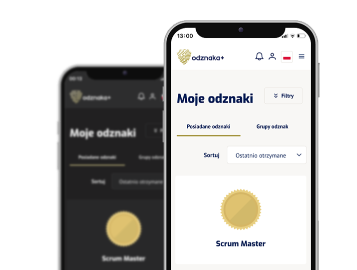
Documents relating to shorter and more specific learning experiences serve a different function. A certificate from a course may confirm participation in or completion of the training, but it does not always mean that the participant has demonstrated mastery of particular skills or knowledge. Digital badges can document individual activities and related achievements, such as taking part in a debate or completing a task in a community project.
A microcredential is more precise. Its role is to confirm specific learning outcomes or skills that have been assessed against set criteria. Its scope is narrower than that of a diploma, but this allows it to show more accurately what a person learned at a particular stage of their education or career.
Sources:
- OECD, “A Skills-First Labour Market: Redefining Talent and Opportunity”, 18 June 2026.
- OECD, “Putting Skills at the Centre of Learning”, chapter of the report “A Skills-First Labour Market”, 2026.
- Eurostat, “SDG 4: EU Tertiary Education Level Nears 45% in 2025”, 3 September 2026.
- Eurostat, “Employment of Recent Graduates Reached 83% in 2025”, 15 June 2026.
- IBE PIB, “Microcredentials – modern forms of skills recognition”, 23 February 2026.
- microcredentials.pl, “Modern forms of skills recognition – digital badges and microcredentials”, 17 February 2026.