Episode 12: Michał Nowakowski
Skills Come First. The Podcast About How to Stay Current
Micro doesn’t mean small. It means flexible, portable and fast
In this episode of the podcast, Michał Nowakowski discusses microcredentials as the currency of skills, their role in education and the labour market, and the microcredentials project at the Educational Research Institute – National Research Institute (IBE PIB).
Michał Nowakowski, the guest on the podcast “Po pierwsze, umiejętności. Podcast o tym, jak być na czasie” (Skills Come First. The Podcast About How to Stay Current), is the leader of the microcredentials project at the Educational Research Institute – National Research Institute.
The path to quality and standardisation. About the IBE PIB project
Today, it is impossible to talk about education, lifelong learning, future skills, or the labour market without addressing microcredentials. They provide a structured way to document skills acquired outside traditional education pathways.
“A microcredential is a digital certificate of skills, but one whose quality has been assured. It contains clear information about what an individual had to do to earn it, as well as who issued it and when,” explains Michał Nowakowski.
At the IBE PIB, the team led by Michał Nowakowski is developing Poland’s national microcredentials system.
“IBE PIB is building an ecosystem in which both issuers and holders of microcredentials will operate. Our experts are developing the requirements organisations must meet in order to join the system and issue microcredentials. They are also creating quality assurance standards for the microcredentials issued within the system,”
explains Michał Nowakowski, adding:
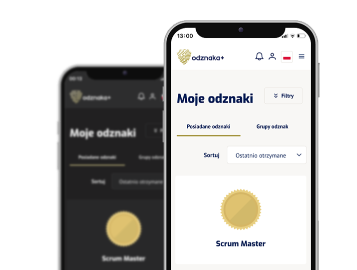
“Quality assurance systems establish the rules and procedures that make it virtually impossible for low-quality products to emerge within the ecosystem. We are also developing the Odznaka+ application for issuing and storing digital credentials, including both microcredentials and digital badges.”
This does not mean that the system being developed by IBE PIB will exclude credentials issued outside the Odznaka+ platform.
“The National Microcredentials System sets standards, and we want them to become a benchmark for issuers outside the system as well. We believe that a focus on quality and standardisation is both necessary and important,” says Michał Nowakowski.
Microcredentials are the currency of skills
Although microcredentials are one of the key topics in discussions about the future of education and lifelong learning, the concept is still relatively unfamiliar in Poland and can sometimes raise concerns.
“We are often wary of what is new. Yet the idea of microcredentials is nothing new – it has existed in different forms for many years, even centuries,” emphasises the IBE PIB expert.
Some of these concerns stem from the belief that microcredentials are intended to replace formal education. In reality, the two systems complement rather than compete with one another.
“Formal education and microcredentials will complement each other. Microcredentials verify specific skills that are valuable in the labour market and beyond, complementing broader qualifications, such as university degrees, which do not provide this level of detail. The prefix micro– does not mean it is small. It means it is flexible, portable and faster than e.g. diplomas awarded after three or five years of study,”
claims Michał Nowakowski, and adds:
“Microcredentials are the currency of skills, and it is precisely these specific, verified skills that are becoming increasingly important in today’s labour market – and beyond.”
Watch the full podcast episode!