Episode 7: Marcin Szala
Skills Come First. The Podcast About How to Stay Current
Time for microcredentials in schools
In the latest episode of the podcast, Marcin Szala discusses the difference between learning and simply attending school, why grades alone are not enough, and how microcredentials can support both students and teachers.
Marcin Szala, co-founder and headteacher of Liceum Artes Liberales in Warsaw, is the latest guest on the podcast “Po pierwsze, umiejętności. Podcast o tym, jak być na czasie” (Skills Come First. The Podcast About How to Stay Current).
Going to school and learning are two different things
Learning accompanies us from the very beginning of our lives and does not end when we leave school or university. Lifelong learning is more than just a slogan – it is a daily reality, from our first attempts at walking and writing, through learning to read, play an instrument or do basic arithmetic, to developing new skills throughout adulthood.
“Learning and going to school are two different things. The desire to explore and learn is natural to human beings. It is not always the same as attending school. We need to ask what happens to a person during those few years between desperately wanting to learn how to walk, for example, and waking up one day and saying: ‘I don’t want to go to school today,’” Marcin Szala points out.
Microcredentials in schools – how can they help?
One of the key challenges facing modern schools is maintaining children’s natural curiosity and enthusiasm for learning, so that it does not disappear once they become pupils and begin to associate learning solely with the school system. To achieve this, schools need to understand the realities in which young people live today and the factors that genuinely motivate them.
“Today’s students are not afraid of teachers. They are afraid of one another, of social pressure, of how they will be judged, and of what might be posted on social media. They feel they are constantly being watched and assessed. At the same time, they live in a world saturated with stimuli. A school that tries to compete with Netflix is bound to lose. That is why a modern school must completely rethink the role of students – they cannot be recipients, they must actively participate in the learning process and be genuinely engaged,” argues Marcin Szala.
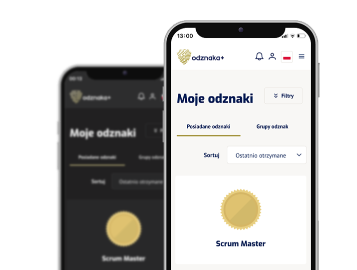
At Liceum Artes Liberales, these observations led to the development of an original assessment system designed to engage students more deeply in learning. An important element of this system is the use of microcredentials.
“The prefix ‘micro’ in microcredentials shows that they can be agile and created quickly. We do not know what people will be learning five years from now, and microcredentials help us keep pace with a changing world,” says Marcin Szala.
The purpose of education – is to meet another human being
The headteacher of Liceum Artes Liberales believes that the ongoing debate within the education sector over the prescribed reading list is largely pointless. In his view, focusing on which literary works should be included distracts us from a more fundamental question: why do we read in the first place?
“We read to understand another person. The same applies to education. For me, its purpose is to encounter another human being,” Marcin Szala emphasises.
In his opinion, this makes the role of the teacher even more important. Students should meet people at school who serve as genuine role models, “the very best examples of what human beings can be”.
Watch the full podcast episode!