We need a united front from the higher education sector regarding microcredentials
During the Campus Mikropoświadczeń, experts explored the requirements for Polish universities to adopt microcredentials and how to ensure the IBE PIB system is accessible to all students.
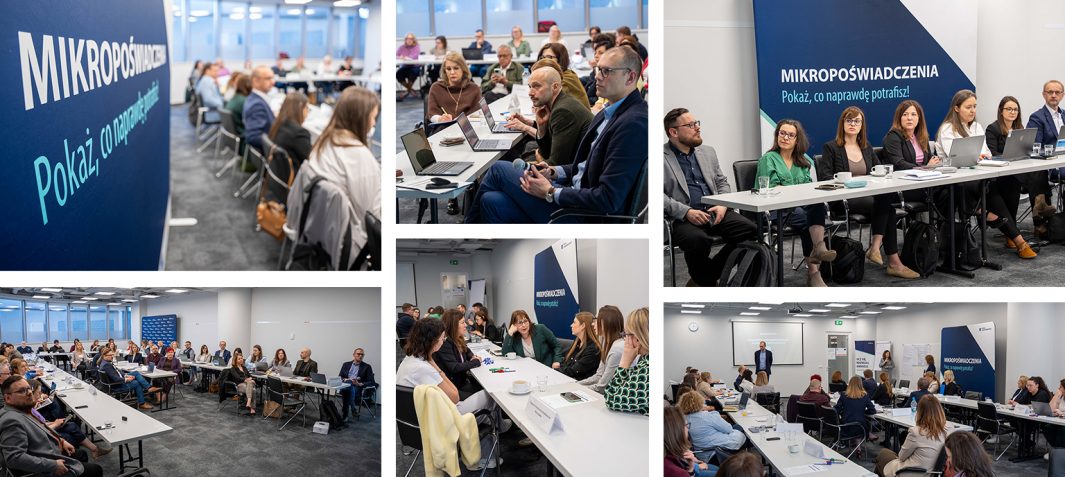
Campus Mikropoświadczeń is the initiative of the Educational Research Institute – National Research Institute that aims to create a platform for open discussion regarding the implementation of microcredentials. The first meeting was held online, the second lasted two days and took place in Warsaw on 22 and 23rd of April 2026. Both events gathered representatives from 32 Polish universities.
“This is an opportunity for university representatives to tell us what they need to implement microcredentials effectively, so that we can meet those requirements as we develop the national system,” stated Michał Nowakowski, microcredential project leader at IBE PIB.
Microcredentials in Poland – a systemic approach
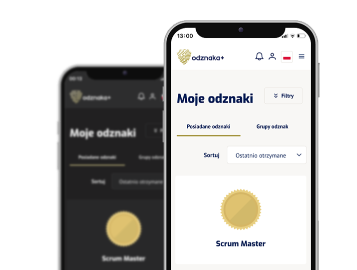
During the Campus Mikropoświadczeń, the participants could listen to IBE PIB experts who explained the differences between various forms of digital credentials, technological aspects of creating a national system of microcredentials, implementation of their quality and recognition. Grzegorz Tylek, Product Owner of Odznaka+ application, explained the complex issue of identity verification:
“Verifying the identity of microcredential recipients is a challenge we have tackled since the very beginning of testing digital credentials. We are following the global trend of developing digital documents based on the Verifiable Credentials profile. At the same time, we are leveraging national solutions, such as mObywatel, for user account verification. We are currently working on enabling Odznaka+ to be accessed via other applications (API), as well as ensuring that Odznaka+ can act as a digital ‘backpack’ for credentials issued by other platforms,” he emphasised.
Developing solutions that ensure user-friendly access while maintaining high security and allowing microcredentials to be used across multiple scenarios is one of the primary goals for the experts building the IBE PIB system.
“We have adopted a systemic approach in our project. Therefore we are not only speaking about Odznaka+ app, but also about a national microcredentials system – an infrastructure that makes it possible to issue and use them across Poland,” marked Dr Wojciech Stęchły, IBE-PIB expert.
And not only across Poland. The portability of microcredentials issued via the Odznaka+ app is another key area of focus for the system’s developers. Its significance was underlined by Dr Daniel Wiliusz, the Rector’s Representative for Microcredentials at Poznan University of Economics and Business:
🗣️ “The system must also be designed with short-term users in mind, such as international students. This is why the portability of microcredentials issued via Odznaka+ is so vital; they must be available in various formats to ensure they can be stored and used within other digital wallets and systems later on.”
Polish universities need microcredentials
Workshops remained an important part of the event. University representatives, divided into five groups, discussed various aspects regarding the implementation of microcredentials and proposed possible solutions. The discussion addressed both the opportunities and risks associated with the use of microcredentials in higher education. Participants also considered the importance of defining the workload required to award a credential. Further debate focused on building recognition of digital credentials within universities and across the country, alongside the technical aspects of the system’s architecture and the critical issues of quality and credibility.
During the discussion on the scope of various digital credentials, several participants noted the urgent need for shared terminology and precise definitions of key concepts in this field.
“I suggest we agree on a common nomenclature: specifically, that the term ‘microcredentials’ be used exclusively in the context of higher education, to distinguish them from other digital credentials issued outside the academic sphere,” argued Arkadiusz Sadura from the Medical University of Warsaw.
Regardless of the difficulties posed by ambiguous nomenclature, there was a clear consensus within the academic community that microcredentials are essential to higher education.
“Microcredentials provide many opportunities for the sector of higher education. As an academic community, we face the challenge of determining what is worth awarding microcredentials for and what is not. We need ongoing dialogue, a sharing of experiences, and a clear set of rules to help us define these requirements,” emphasised Dr Anna Witek-Crabb, the Rector’s Representative for Microcredentials at Wroclaw University of Economics and Business.
Despite representing a broad range of viewpoints, university representatives successfully developed numerous solutions and reached a consensus on the most critical issues currently being addressed by IBE PIB experts.