What do teenagers want (and need) to learn at school? Five desirable skills
In just a few days, around 1.7 million Polish teenagers will take their seats in classrooms at upper-secondary schools, technical schools and vocational schools. These are young people who will be entering the labour market within the next few years. Which skills will be valued in the future? How can students be prepared for jobs that do not yet exist? And how can future skills be validated?
Teenagers – ambitious and pragmatic
Let’s start by looking at the educational and career aspirations of Polish teenagers. According to the Nationwide Education Network (OSE) and ThinkStat NASK – National Research Institute, almost 44% of them want to continue their education while also working after completing upper-secondary education. One in five graduates plans to work, while 19.8% want to focus solely on further education.
The sectors they find most attractive and would like to pursue professionally are IT (10.3% of respondents), psychology (9.4%) and medicine (8%). Their preferred forms of employment are running their own business (35% of respondents) and working for an international company (30.3%).
The research paints a picture of ambitious and pragmatic young people – they want to continue learning while gaining professional experience as quickly as possible. Consciously or intuitively, they are choosing sectors in which, at least for the time being, human capabilities and skills play a significant role, while AI serves primarily as a supporting tool. They value the opportunity to shape their careers independently and to work in environments that extend beyond the local community.
Desirable (and essential) skills
What, in turn, do experts say about the future of education and the labour market? They agree that the development of new technologies inevitably means that education systems must change. Above all, it is time to move away from a model in which schools focus on one-way transmission of knowledge, towards engaging students in consciously directing their own learning.
“A modern school must completely redefine the role of students – they cannot be passive recipients; they must actively participate in the learning process and be engaged,” explains Marcin Szala, head teacher of Liceum Artes Liberales in Warsaw, in the podcast “Po pierwsze, umiejętności. Podcast o tym, jak być na czasie” (Skills Come First. The Podcast About How to Stay Current).
A key message from experts at the OECD (Organisation for Economic Co-operation and Development) involved in the Future of Education and Skills 2030 project, set out in the “Learning Compass 2030” publication, is that the emphasis should be on the parallel development of skills across the cognitive, social and emotional, practical and physical domains.
Let’s look at five selected skills from the areas identified by the OECD:
- Critical thinking, meaning the ability to analyse information, assess the credibility of sources, identify logical fallacies, recognise manipulation and draw well-founded conclusions. In an age of vast amounts of information and the rapid development of digital media, this is one of the key and most highly sought-after skills.
- Creativity, which includes the ability to generate new and original ideas, identify new applications for existing solutions, combine knowledge from different fields, experiment and learn from mistakes. As experts emphasise, it is not simply an innate characteristic or artistic talent, but a skill that can be developed.
- Self-regulation, which involves the ability to plan, anticipate the consequences of one’s decisions, and control impulses and emotions. People with well-developed self-regulation skills are more effective when taking on new educational and professional challenges, making these skills particularly valuable in the context of lifelong learning.
- Communication and collaboration, which are essential both in classrooms and in workplaces. Their growing importance is driven primarily by increasingly diverse groups learning and working together across ethnic, cultural and linguistic backgrounds. At the same time, collaboration is no longer limited to exchanging information and experience with other people; it also involves working with artificial intelligence tools.
- Wellbeing, which includes areas relating to physical and mental health. Physical activity tailored to the individual needs and abilities of young people is undoubtedly an important element of maintaining good health. At the same time, the areas of the brain responsible for motor coordination are closely linked to executive functions responsible for planning, concentration, memory and self-control.
Students in the final years of upper-secondary education, as well as those gaining their first professional experience, have intuitively identified skills similar to those recommended by the OECD among the most desirable. According to Deloitte’s “2026 Gen Z and Millennials Survey,” they place the greatest value on skills related to public speaking, leadership, the use of AI tools, communication and creativity.
New skills and innovative ways of validating them
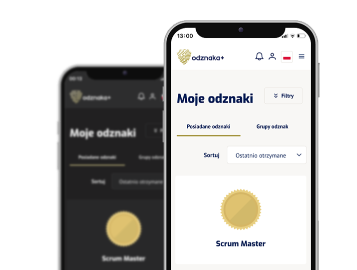
Changes to education systems responding to the demands of the modern labour market and students’ expectations will not be limited to the scope and methods of knowledge delivery. It is difficult to imagine skills such as critical thinking, creativity or collaboration being assessed and validated using a traditional grading scale. This is where microcredentials could play a key role.
“We are consistently building a national microcredential system in Poland, working with numerous organisations from the business, public administration and higher education sectors. Based on our experience so far, we already know that it will have broad applications at the intersection of people who are already working or planning to enter the workforce, employers and educational institutions. In September, upper-secondary schools will join the organisations involved in this process,” says Michał Nowakowski, microcredentials project leader at the Educational Research Institute – National Research Institute.
As part of the pilot programme, 140 upper-secondary schools will join the project. Students’ new civic education skills will be validated using digital microcredentials and badges, accompanied by a detailed description of the work completed by the students and its outcomes. Once the pilot has concluded, experts from the Educational Research Institute – National Research Institute will assess whether, and in what way, the new approach to validating skills has affected students’ sense of agency, motivation and self-esteem.